Saturday, January 22, 2011

Why Didn't I think of this before?

Calves are, without a doubt, Just about everyone's hardest body part to build any kind of muscle on as well as that one part of the body that just about everyone doesn't like on themselves. I can certainly count myself as part of that group. I admit that I have thin calves. Some of you may recall that I wanted to focus more on exercises for my lower body, trying to improve on them, particularly the harder pistols and Glute-Ham raises (GHR). The GHR got moved to the top of that list.

I've barely been working at these for two weeks and I'm dumbfounded and stunned as to how fast my calves responded to my GHR work. I'm not doing full-blown GHR's at the moment. I can get about halfway down before I drop and I can push myself up off the ground with my hands. Either way, My calves are really starting to respond. What's going on here? I thought that this was supposed to be the most stubborn muscle to grow?

Well, I was walking around, thinking about my achy calves when it hit me what's going on here...

We all know that the heel raise is the standard method to getting the calves bigger. The trouble is, it works for some people and seemingly not at all for others. The common answer is to add more weight. It's the same situation: for some it works, for others it still doesn't. This is what hit me: it's not that some people aren't adding enough weight. The problem is that their feet have the wrong leverage to make the move work for them!

Note that I didn't say bad leverage. I said WRONG LEVERAGE. Open up any anatomy book and there will be a section discussing the three classes of levers. The heel raising up off the ground is a classic, class 2 lever...
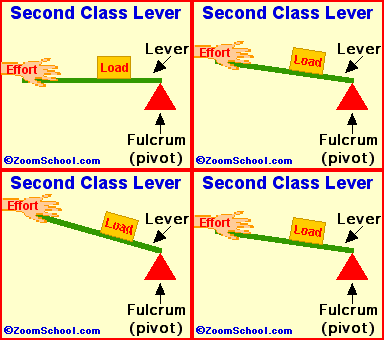

This may not makes sense from here on out unless you do a little reading.
***Disclaimer: I'm not an expert on leverage in relation to the body. I only understand this if I read it and study it enough, over and over and over. I only get what I'm talking about because I experimented and read about it!***


Class 2 levers are more efficient at moving a load if the lever itself is longer. A good example is nail clippers. They're class 2, just like a heel raise. We use toe nail clippers because they are bigger and apply more force to cut through the much-thicker toenail. So, if a person has long feet, relative to their ankles, then the lever is more efficient.

The trouble with that relative to strength training is that the gastrocnemius (calf muscle), in turn, doesn't have to work harder. Remember, muscles only get bigger only when forced to do something really hard. So, good second class lever/long foot equals small calves! This is why women often have more muscular calves than men: smaller feet!

SHOW-OFF!!

Are you with me so far?

So, unless a person with long feet has the capability to pack on some ungodly amounts of weight on a bar, a calf raise is probably not a good exercise for them. So, where do we turn? You guessed it: Change the leverage... ENTER THE GLUTE-HAM RAISE!

We get so caught up in the heel-raising experience of the calf that we neglect it's other job: It also helps flex our knee. Take a look at this picture of the calf muscle...

See how it connects to the femur, above the knee? By doing a GHR, it's not working as a class 2 lever anymore. Now, it's working as the much less efficient class 3 lever (did you read that page like I told you to?) Since it's functioning in a more inefficient manner, it really has to work. More work=more strain=bigger muscle!
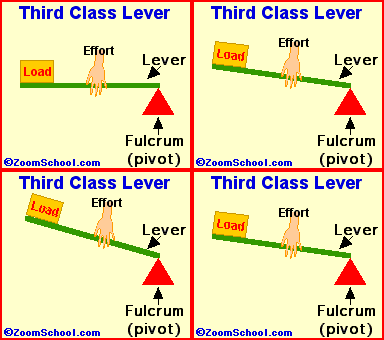
The knee joint is the fulcrum, the force comes from the calf muscle's origin at the femur, and the load is the body. Get it?

That isn't to say that the GHR is the only exercise that forces the calf to work as a class 3 lever. Anything that forces it to flex the knee helps. This is why hikers and bicyclists have such muscular calves too!

Sure, it takes some technical reading to understand all of this stuff and I hope I've done a decent job of simplifying it enough for the masses to understand. What I don't get is why on earth this isn't mentioned more often by the people we (half) expect to know this (our trainers, books, etc). Is it ignorance or willfully holding back quality information? I leave it to you to speculate.

In the meantime, I'm going to keep plugging away at the GHR's. It's always nice to see results!

Friday, January 21, 2011

The Strong Image

Pop Quiz(for those who know nothing about MMA): Which of these guys has the highest win percentage?

OR...


Answer: The guy at the top is Phil Baroni, the brash and trash-talking MMA punching bag with a 13-13 record. The guy at the bottom is Anderson Silva, a fighter who could lay a solid claim to being one of the greatest MMA fighters of all time, who has a 27-4 record.

Obviously, for those more knowledgeable in all matters of MMA, Silva is a far more technically sound fighter than Baroni will ever hope to be. Fighting has little to do with how a body looks and it's all about the skills it can perform. Just the same, those of us who watch him know that Anderson Silva is a powerful striker. On the other side of the coin, the body-beautiful Baroni, a guy who's graced the cover of Muscle and Fitness, makes a most basic mistake: a body isn't strong and powerful just because it looks strong and powerful. It looks good though!

This is hardly a new phenomenon. After Eugen Sandow realized (courtesy of Arthur Saxon) that he wasn't the strongest guy out on the Vaudeville Circuit anymore, his shows changed. It became more of a display of his body first and a strongman act second. That played into the bigger scheme of things anyway because most of his shows' attendees were more interested in how he looked anyway. That may have marked the beginning of the slow, but sure, separation between looking strong and being strong. Sandow was perfectly fine with looking part of "the world's strongest man" the part rather than being the part. The former was far easier to pull off.

It's hard to completely cut down the imagery of strength though. Although there were other contemporaries of Sandow operating, the the mere image of muscular strength, for all of its benefits, was a sure indicator that the owner of the hyper-developed muscles was a low-class laborer. The ideal male image, for a long time, alternated between being extremely thin (proof they didn't do any manual labor)or extremely fat(Proof they had enough money to eat as much as they cared to and did move/labor much).

The funny thing that eventually emerged after Sandow was, of course, aethetic bodybuilding. They carried on the tradition of the look of strength being more important than the ownership (that's not to say they weren't strong, it just means that it was secondary). The illusion began to shape their reality: train for shape and strength will follow.

It's also interesting to note who shaped that image. A Google Image search of any name bodybuilder (Take your pick: Jack Lalanne, Dan Lurie, Earle Liederman, John Grimek, Tony Samsone, Arnold, etc) from the 1920's to the 1970's will, in all likelihood, turn up some sort of gay erotica. An unknown, but probably very large, portion of the early bodybuilding fans were gay men. It could be said that that image of strength for most of the 20th century was tailored to be homoerotic. Nearly all of the major bodybuilding photographers were gay. Joe Weider knew what he was doing when he started his shirt-pocket sized "Adonis" magazine.
I wonder what Phil Baroni would say to that.

Shots never fired always miss. The ideal about the relationship between men's physical ability and physical appearance has fired several shots and missed more than a few times. It's a better track record than the opposite sex. Generally speaking, any display of anything remotely resembling muscular power has been strictly off-limits in the feminine image for as long as the names, "physical culture", "strength training", or "bodybuilding" have existed. The awe that this ad inspired kind of annoyed me. I recall this ad with Jennifer Anniston being some sort of pinnacle of the fit female. Forgive me for saying this but she looks like a stick figure! Would it actually hurt to lift something meaningful other than a pekinese-esqe dumbbell? Real weight, and real strength training, doesn't turn women into men!

See me in the background? I may have been looking for a 53 lbs kettlebell that they ended up hogging! How rude!

So, what's the solution to the strong image problem? Well, I think that a good starting point would be if everyone could collectively hold up the physical ideal of people that look like they can do strong things because they ACTUALLY DO things that make them strong! Would that be too much of a leap?

I hope you're not going to ask me (or yourself) what does that look like? If you insist, then here's an idea: go out and do stuff that makes you strong. Do it with other people. Repeat this over and over. Stop looking to E! and trash-magazines for the answer. You'll start to see for yourself. These activities don't have to be anything specific, although I think that we could all use a break from the cardio-workout-saturation. Strength is platic in nature. So, its presentation is going to vary. Don't get too hung up on that. Just learn to appreciate a strong performance first and what it looks like second. That's when we'll get this whole thing straightened out.

Saturday, January 15, 2011

Push-up vs Bench Press, revisited

For those of you who don't blog, or don't use blogger, they've got this cool feature that tracks all of you. I know how many readers I have, what they're reading, and where they're from... among other things. It's getting kind of addictive, even morphing into a form of cyber-narcissism.

What's kind of interesting to me is my most popular blog entry, going all the way back to 2008: The Push-up vs The Bench Press. The picture I had of things was that the strength training world was pretty much united behind this exercise as the greatest, most awesomest prover of strength. Apparently, there are more cracks in the ol' fresco than I imagined. Is some of the paint flecking off too?

I recall finding that T-Nation article a few years ago that I linked to in the original post. I admit that my mind functions in ways that don't quite allow me to catch onto medical information with haste. My understanding and retention of such intelligence comes from the sheer will to read it over and over again. What I've managed to keep glued in my mind is the problem with the bench press is the bench. The exercise doesn't lend itself well to exercising the muscles on the shoulder blade that rotate the shoulders upward because you're lying on a bench. What too many end up with if they practice lots of benching is winged scapula and shoulder problems.

Now, I fully understand and agree that many, if not most, exercises, if done to excess, can result in other muscle imbalances. What gets me about the bench press is twofold. First, it seems just a little too easy with this exercise. Secondly, I find it just a little fucked up that this exercise can cause the same problems in the shoulders that affects people who sit in front of computers with bad posture or drive truck for a living! In other words, it could cause the same problem that NOT EXERCISING could cause!

I think that a lot of weight trainers, in the back of their minds, know this already. The just ignore it, pretending it's all a part of the, "no pain, no gain" mentality. Some admit it though. For Example...

Jamie Lewis isn't a fan of the Bench Press either...
Jamie: What, you’re not going to express horror at the fact that my program is bereft of the bench press?

MG: No, the dips and shoulder presses would take care of them for a long time.

Jamie: Look at you. I’m proud of you. I have an ongoing argument with a friend over my hatred of incline bp, which he thinks is essential. Meanwhile, his upper chest looks like shit, and his shoulders hurt. I’ve got a decent upper chest, and no shoulder pain, and he just won’t accept the fact that the log press is far better for upper chest development than incline bp, and better for your entire shoulder girdle.

I guess he just likes laying down when he should be lifting.

MG: Well, any shoulder pressing will hit the upper chest to some degree not to mention the dips.

Jamie: Exactly...

And I caught this one a while back from Matthieu Hertilus
But even though I wanted bigger, stronger shoulders, I realized that I needed healthier, more flexible ones even more. I might not have problems now, but given the amount of benching I already admitted to doing, the writing was on the wall...


To top off my severe dislike and almost non-existent desire to do anything resembling a bench press, I find it funny that this became the go-to exercise to build up the chest muscles to begin with. Okay, the aesthetic ideal for the chest comes almost-exclusively from bench pressing. Let's talk function. It's not like it's the ONLY way to build the pecs. Here's a brief run-down of the pectoral-major's actions:

1. Flexion of the humerus, as in throwing a ball side-arm, and in lifting a child
2. Adducts the humerus, as when flapping the arms.
3. It rotates the humerus medially, as occurs when arm-wrestling.
4. Deep inspiration (breathing)

Or, to put it another way...

Do you see where the three planes meet together, at the upper and front of the body? Well, If your arms move in any direction in front, your pec-maj is there to help them. So, with so many different ways of moving, why limit to just one exercise? There are several exercises that can work the chest...

Double Plate Press

Dips with Chains
(a recent favorite of mine)


Face Pulls

I know, I know, you're starting to wonder when I'm going to mention the push-ups. In a way, I'm saving the most obvious, and maybe the best, for last. The push-ups may not give the most currently-aesthetically pleasing chest but they might be the overall best for balanced chest development that you can get into one exercise. No, I'm not going to say that it's the cure-all but I think it's closer than any other exercise that I've named. The descent down to the ground (when done right, no dropping. CONTROLLED!) give some good work to those muscles that don't get worked with the bench there. Of course, the ascent is awesome for the pec-major.

I know that a lot of you are well past the point of using the plain-vanilla push-up and need something else to make the push-up harder. So, if you're regular readers, then you also know that I've covered how to make the push-up harder many, many times in the past three and a half years. A couple of ideas...

Try 5 of those, with each arm
Whoa, even I haven't done that with the Perfect Push-up!

I'm not going to lie and say that with the right exercises to balance it out, bench pressing couldn't be done without any long term problems. Upper body pushing and pulling work will help out in that respect. It's entirely possible that people can, and they do, bench press without shoulder issues. Like I said earlier, on it's own, I think it sucks worse than a lot of other exercises because it's so incomplete on it's own. If it's that incomplete, then I also find it's popularity so completely asinine. I recall a conversation I had with a friend who told me that in his father's time (who is in his mid 80's) the standard measure of a man's strength with a barbell was the military press I like that idea.

But I'm a bodyweight guy, remember? I like push-ups better.

Friday, January 14, 2011

So, if Michelle Obama's full of it, then how do we eat then?

Several weeks ago, I wrote a somewhat critical entry about Michelle Obama’s crusade to make our kids eat right. While I’d support any effort to get any American (especially children) to eat properly healthy, I was skeptical of her probable means to make that end. If you recall (and if you don’t, click here), I started out with a picture of our esteemed first lady walking up a flight of stairs with two other wives of foreign leaders. She’s very obviously larger than the other two.

Is that a problem, really? Well… If there’s one thing that I’ve noticed as I kick around this sub-culture of ours is that your body sells your message. It’s definitely a lead by example kind of world. It’s difficult to be taken seriously if you don’t look the role. Sure, I’m sure it’s possible to have the knowledge of how to be strong and healthy without actually being either but without the body to sell the method, the message reeks from lack of authenticity. So, our thunder-thighed first lady trying to get our next generation to eat more fruits and vegetables smacks of hypocrisy.


So, we’re greeted (yet again) by a good message delivered by a bad messenger. Obviously, we need to eat right but this messenger doesn’t know how to do it. Even if she did, would we really believe her?

With so many people fat in the United States, we have to ask some questions. Is this a case of willful ignorance of not knowing how to eat right? Or, do people genuinely not have a clue? Well, if I assumed the former, I’d be forced to write yet another angry, rant-style blog entry… which I’m in no mood to do. So, we’ll assume that the situation is this: people want to eat right, don’t trust the over-fed, “eat right messenger”, and are left in a diet limbo, not knowing which direction to turn.

So, I’m going to try to make it easy. Yes, you read that right: I’m going to try to simplify the healthy diet. Most of us who are knowledgeable (or pretend to be) about such things know that this is not an easy topic to simplify. There are so many different diets competing for your faith (and your money) in them. Still, I think that this is doable and I’m going to take a stab at it. Right here. Right now.

First list; stuff you should be eating (in order of highest quantity and most important):
1. Vegetables
2. Meat (not processed)
3. Fruit
4. Eggs
5. Nuts and seeds
6. Whole Grains
7. Milk (okay, it’s a drink, sue me!) and cheese
8. Legumes

How you should prepare these foods (in order of priority or relevance to the food)
1. Raw
2. Baked
3. Broiled and/or grilled
4. Steamed
5. Dried
6. Boiled and/or poached


What you should drink:
1. Water
2. Water
3. Water
4. Water

This list should pretty much sum of 6/7th or 85.71% of your dietary intake for the week. In other words, you eat right six days out of seven, letting it all hang out one day of the week. Your daily caloric intake shouldn’t really swing much higher or lower than 2000 calories. You should also be preparing the overwhelming majority of this food yourself.

Is this “diet plan” the best? I’ll fully admit it’s not. It’s not even a diet, really. It’s a guideline on how to eat right. It’s also a far better description of how most Americans dine. We can split hairs about whether or not dairy is the worst thing to consume, how legumes shouldn’t be consumed at all, or how I didn’t mention the word organic at all but let’s be honest: there are several cultures who have ate the two formers in profusion and lived long, mostly degenerate disease-free lives. Furthermore, many of us don’t have the ability to eat the most perfectly farmed foods ever but the next best thing is still far better than resorting to McDonalds. Those of us fortunate enough to be both (supposedly) knowledgeable on the topic and honest with our audience will admit that there is no perfect diet anyway.

They drink milk. Lots and lots of it!

This list also is a good description of my diet...well, most of the time. I’d like to think that I’m in much better shape than the average American. My Life Insurance agent gave me a rate that roughly 7 out of his 800-or-so clients don’t get so I assume that I know what I’m talking about. I think I can prove that I know more than the First Lady does. So, if you’re feeling ignorant about how to eat right, and assuming that you didn’t skip over vast swaths of this entry, consider yourself informed. Now, it’s time to follow through.

Thursday, January 13, 2011

300... and a trip to a real gym!


Yeah, boys and girls, this is my 300Th post! I'll hold off on the self-congratulatory stuff though (for now) and talk about something else. I'm marking this massive achievement on my blog by doing something that I haven't done in 13-or-so years: I actually went to a gym! With weights. And trainers. And cats...

In other words, I got went toBodytribe Fitness in Sacramento, CA. I first heard about the place several years ago by correspondence with Ed Pierini. He often mentioned that he trained at this place that was, "a little different." A subsequent, several-year investigation of their stuff online left me with the following feeling: I'd love to train here.

The first opportunity back in June, 2010 fell through. That would not happen again this time. My body and my job cooperated so I decided to attend their first January Kettlebell class. At the moment, the gym is under the knife, getting bigger and better. It has the same feel that I liked about it before the surgery began: it's a nice balance of serious and fun. There's useful knowledge and hard work here performed by people that take their strength training (and not themselves)seriously. It's nice to be at a gym that's barren of pretense. I'm moments away from accidentally using a dog for box squatting!
Allyson and Chip taught the class. For a dude that never works out more than 40 minutes, I was wondering how fast a 2 hour work shop could go by. The answer: VERY fast! Remember that fun-serious-balanced blend thing I mentioned above? That carried over into the class too! I learned a lot and I had a lot of fun while doing it. I got to hang around with a bunch of cool people ("Hey, you're the Bodyweight Guy!") while we picked on the Shake weight (sorry, Allyson!), Paleo Dieting, and Russell. What more could you ask?
How about a book and a T-shirt? Chip generously reduced the price of his book "Lift With Your Head" from $100 down to $22 for me. I'm sure he'll cut you the same deal. The Bodytribe crew's been making the rounds across the United States. If they bounce into your neighborhood, you might be making a physical culture-crime, punishable by death, for not attending. If you're one of my UK, German, or Australian readers, be patient and make do with the book.

Now, back to the whole 300 Thing...

This was one of the more thought-provoking items that I read on the way out to Sacramento. I'm sure that you know where this is going. It's time for a little bit of public, yet personal, introspection on what I'm doing with this piece of Internet real estate. Lot's of people peck away at keyboards about strength training. Do they have something useful to say? Does their routine hold the key to your fitness goals? Are we all dying to hear about the things that piss them off?

Well, I find my blog useful to me. I enjoy writing. I enjoy training. I enjoy thinking too. Writing takes thought, right? How many times to we use our computer as a way of turning off our minds? Do we do that too often? I fall prey to that, I admit. So I write so I can get my brain worked-out. Just like training the rest of the meat.

The next question though is my muscle musings useful to anyone else? How to judge that...HMMM Maybe such judgement should be reserved for the individual reader to decide. I'm left looking at my "stats" page trying to decipher if the data there equates to my blogs usefulness. The number would suggest they are.

When I think of running, I usually think of a tedious form of nearly-worthless (for me, anyway) exercise that I don't have the time or the desire to do. I have to say this about running though: for cheap exercise, it's hard to beat. There's an industry out there devoted to selling you, as comedian Jackie Mason put it, "a floor...ON A FLOOR," when really, you only need three things:

1. The Earth
2. Shoes
3. Clothes
Even the last two are kind of optional!

What if someone wants to do some strength training? That requires stuff. Lots of stuff. By stuff, I mean things like massive wads of iron in differing shapes and sizes held onto rods, bars, and handles attached to machines. Wait a second, are we building cars or our bodies here?

We know that we don't need all of that shit to get strong. In fact, there isn't much at all that's needed. I don't think that message gets out enough. Even when it does, the message is flawed. Advocating of endlessly-higher reps of calisthenics doesn't amount to a whole lot except: the ability to do high reps. BW can be very effective, it just needs to be used properly. I do my best to show to do that.

I use iron these days. In the old days, I didn't mostly because I couldn't. When I could use weight, I held off, satisfying the curiosity about whether or not I even needed it. I got really strong without it. I could still continue to get strong without iron if I so chose. Strength training really isn't that dependant on what you can lay your hands on.

I've had other messages in the past 299 posts but keeping focused on minimalist strength training has been the underlying theme the whole time. By reading, I can only assume that you've found what I have to type useful.

I thank you for your time.

Sunday, January 9, 2011

The Perfect Push-up should be in your posession. Here's why...

Ubiquity, more often than not, is a curse in the fitness world. If it's everywhere, chances are that it's also over-hyped. That can only mean on thing: it's also a piece of shit if it's being pushed that hard! Only a few legitimate pieces of training equipment manage to elude this fate: most notably, barbells and dumbbells. Stuff like the Perfect Push-up get about as much respect as the 5 lbs, plastic-coated kettlebell and workout DVD set it's placed next to on clearance at your local Wal-Mart.
WHAT A SAD, LITTLE PIECE OF SHIT!

That's just too bad. I'm not going to go so far as to elevate it to the same pantheon of all-time great training gear as the ancient barbell or dumbbell but I'm quick to defend this often-maligned piece of gear. I've actually got the original and the travel version. I started out like everyone else about this thing: I was very skeptical. Rather than pay good money for something that might turn out to be complete junk, I did the next best thing: I put it out there as a suggestion to anyone looking for a gift for me for Christmas. My wife took the bait, and I got to work on trying it out.

How do these work? They provide the shoulders with more work. Why they do this is pretty simple to understand once you get an info dump on the Deltoid muscle. The Delt is a classic example of multipennate muscle fiber. What that means is the fibers of the muscle are laid in a feather-like arrangement. So, when they contract, they move in a somewhat circular manner. This creates a lot of tension and power in a short movement... or so the creater of the PP, Alden Mills, says, and who am I to disagree with a former platoon commander of SEAL Team Two?

So the Perfect Push-up, by adding rotation to the movement in addition to moving the body up and down, creates more Delt recruitment. So, this dual-action helps make the push-up harder, often reducing the number of reps by 1/3 to 1/2, depending on the push-up variation. That's why I think that they rock so much!

So, if you're doing 50 push-ups without the PP, now you're doing 33...

Wait a second...

This is bullshit, right? It's still well within the realm of the dreaded, muscular-bulk-choking strength endurance! So, what the hell's the point of shelling out the $30 or $40 that these things are going for if there's no "real, serious" strength training benefit?

Think beyond the possibilities of little instruction cards and posters included with the PP. Remember that push-ups are a family of exercises, not just one exercise. So, you just have to look to other push-up variations. So, do other push-ups with them than just the standard push-ups!

Candidate number one for PP's is one of my favorite exercises of all: the handstand push-up. The PP is plenty rugged enough to handle my entire bodyweight bearing down on them and will easily slice off 1/2 of your reps that you're capable of doing due to the rotation and the extra 4 inches of extra height you can lower yourself.

Still not enough? What about one arm push-ups? Did you ever consider those because you can do those on the PP's as well! I started doing those late, last year. Since the handles elevate the body, they make the OAP a little easier on the abs and obliques. That overall ease rapidly disappears as the body dips down, below the handle. Coming back up also becomes more difficult too. Once again, expect at least a 50% drop in reps.

On both push-ups, start out with the handles parallel to your body, rotating them to perpendicular as you drop down.

One thing that anyone who decides to use BW as a part of strength training will quickly realize is that this style of training requires the user to look past the obvious two methods of making an exercise harder: add more reps and/or add more weight. The former only works for so long and the latter costs money and demands more and more stuff. Maybe the perpetual demand for more of the ferrous stuff isn't a problem for you. Others aren't so well endowed. So, I like the PP because it introduced something me to a new, yet simple, way to make an exercise family that is so ubiquitous in the fitness world harder.

Saturday, January 8, 2011

2012

Statistically speaking, most everyone walking around on this rock couldn't wait for 2011 to end. Just about everyone and everything got force-fed various platter of steaming suck. Were I to look back on the year, from my individual training goals for 2011, I certainly ate my portion of what everyone else was eating.

I didn't climb my 3" rope. I just didn't have enough places to work with it.

I haven't done a GHR. I just felt like I started getting the exercise.

I'm still shaky on Pistols. I was just too proud to be humbled by trying to do these regularly.

I lost interest in this year's Demolition Day


It's about time that I uttered what is now the most cliche statement to sooth the indignance of 2011: focus on the good things that happened this year. In spite of not hitting my goals, there was still lots good look back fondly on. The 30 Minute Challenge came up again on Rosstraining.com. I went with the Handstand Push-ups and beat last year's total of 155 reps, doing 165 reps in 30 minutes. I fell in love with Bent Pressing at the beginning of the year, particularly Doing Two Hands Anyhow. I started out this year just barely doing 65 lbs and 50 lbs Kettlebells. I'm up to doing 111 lbs and 60 lbs. Most of all, looking back on it, I feel awesome this year. Overall, I haven't felt this good since 2007. I can hang my hat on that.

The rest will fall into place soon enough. In the meantime, there's work to be done and it doesn't get finished up by thinking about a shitty year that we left behind.

Happy, 2012!